
 843.607.6893
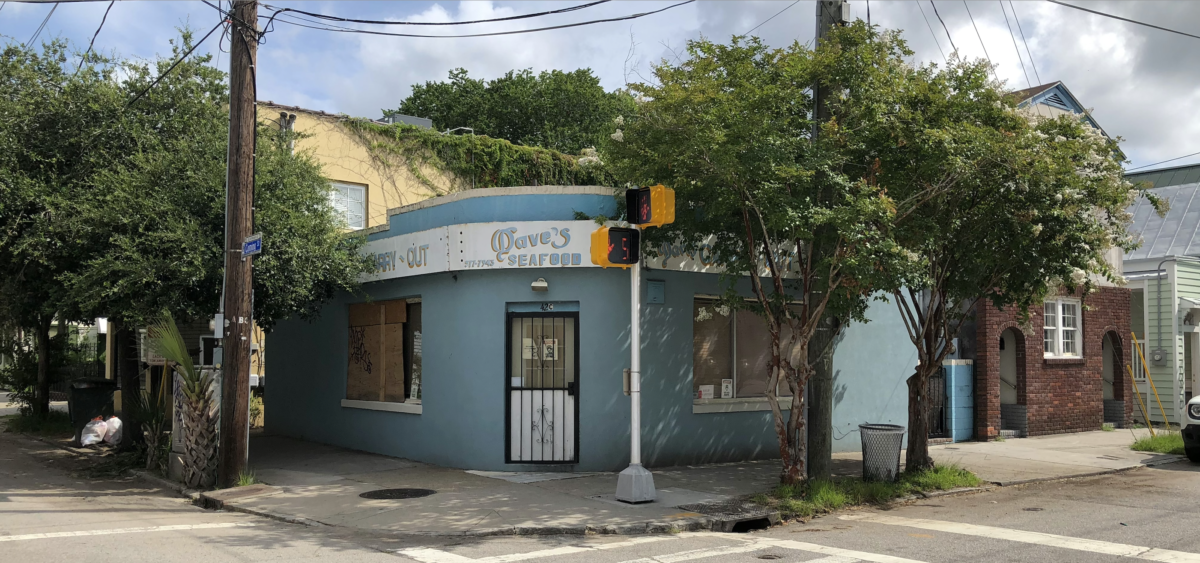
Along with the “fancy” restaurants in the touristy parts of the city, visitors and locals seek out Lowcountry soul food restaurants to get a taste of the most historic cuisine in the South- and a delicious meal. Iconic soul food restaurants abound off the beaten paths in and around Charleston, so we’ll highlight just a few of the oldest, newest, and best-loved: Hannibal’s, Dave’s Carry Out, Bertha’s, and Martha Lou’s Kitchen, among others.
Though a relatively new name, soul food place have their origins in the earliest days of colonial settlement, as enslaved Africans blended their traditions with those of the Caribbean, Native Americans, and white Europeans, yielding Gullah and Geechee culture and cuisine. Dr. Bernie Powers notes, “[Charleston] was saturated by African people and African culture because for years they made up the majority of the city’s population.” According to Chef BJ Dennis in an interview with Southern Living, soul food traditions like the soup bunch are a plantation fusion: “when farmers came in from James Island, whatever they had left- cabbage collards, a potato, a hot pepper, a rutabaga, maybe a little smoked meat- they cooked it all down to where it was like a stew. That’s as African as you can get.”
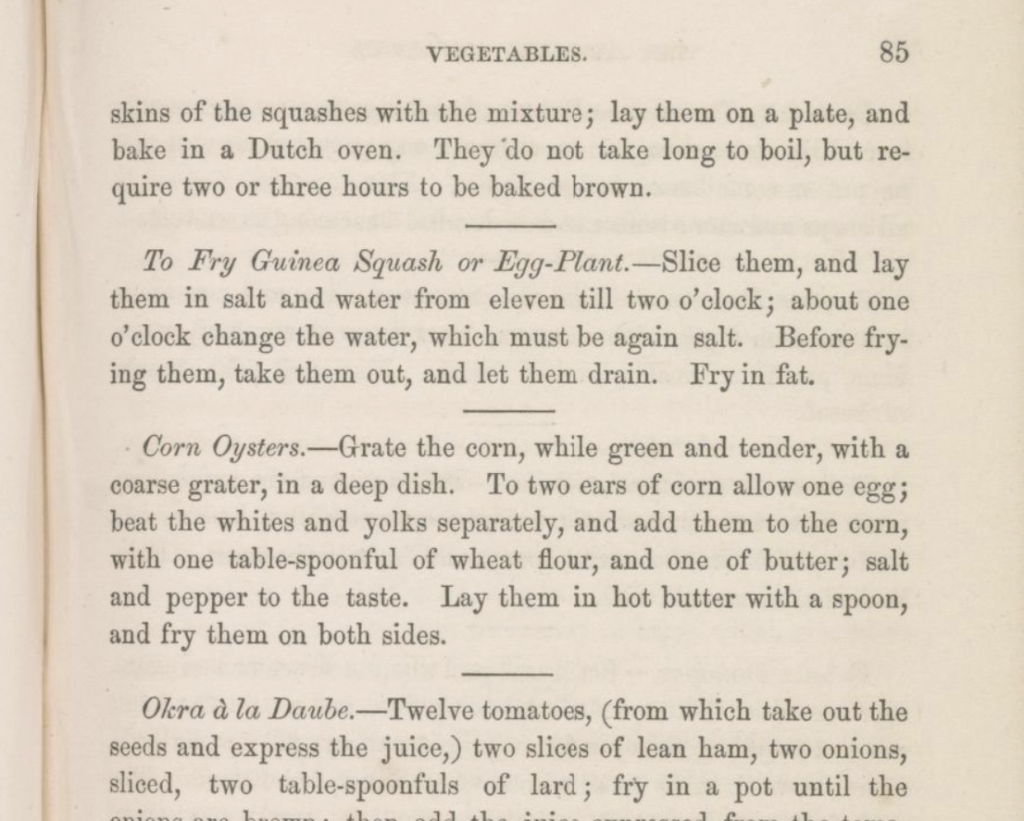
Sarah Rutledge’s 1847 book The Carolina Housewife, one of the earliest South Carolina recipe books, demonstrates that white plantation owners adopted and enjoyed local dishes (created by their enslaved cooks) that we now would call soul food. Her recipes included baked shrimp and tomatoes, shrimp pie, and stewed crabs: “Take three or four crabs, pick the meat out of the body and claws; take care that no spongy part be left among it, or any of the shell. Put this meat into a stew pan, with a little white wine, some peppers and salt, and nut meg. Heat all this together and then put in some crumbs of bread, the yolks of two eggs break up, and one spoonful of vinegar; stir all well together. Make some toasted sippets, lay them on a plate, and por in the crabs. Send it up hot.”
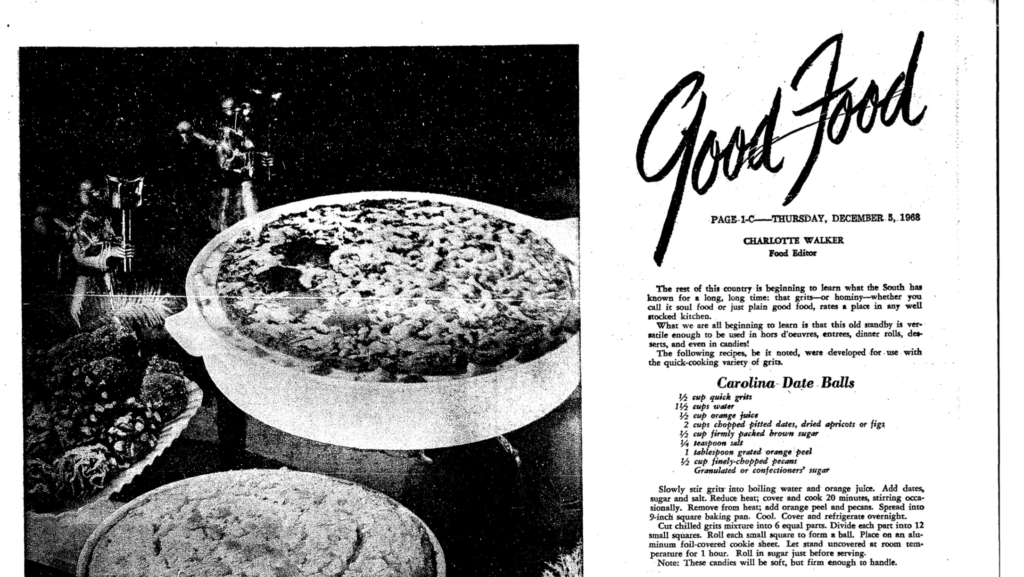
In the late nineteenth century, references to “soul food places” referred to religious satisfaction, and good teachings as food for the soul. It was not until the Civil Rights era of the 1960s that “soul food” as a term for African American southern foodways became more widely known. Charleston’s newspapers for best restaurants in Charleston SC (written by whites and largely for whites at that time) had several short articles explaining soul food for its readers. As southerners, most were familiar with the cuisine, just not the new nomenclature; “The rest of this country is beginning to learn what the south has known for a long, long time: that grits- or hominy- whether you call it soul food or just plain good food, rates a place in any well stocked kitchen.”
A 1969 Charleston Evening Post piece summarized the origins of soul food succinctly: “have been asking about ‘soul food.’ What is it? It is nothing more than a new name for food long familiar in the South. Hoppin John [rice and black eyed peas] is soul food; red rice is soul food; greens, slowly cooked with a piece of salt pork of baked; hog’s head cheese. Most dishes requiring long, slow cooking times are soul food. Restauranteurs in the North explain soul food dishes as ones concocted of least desirable cuts of food which were the only ones available to the poor. But such cuts were available to more affluent families. Available and appreciated. Restaurants in the North and in the South having an eye on the tourist trade are getting on the band wagon. Women who make their living by cooking can tell you how to make soul food once they know what you are talking about. Sophisticated black citizens seemed to be amused by the whole thing.”
A 1972 offered up a list of the staple dishes and their origins: “Soul food places from America’s oldest South, where foodstuffs from plantation kitchens were mingled with make-dos. Available greens of collard, mustard, dandelion, turnips and chard were served with chicken, fish from nearby waters and rejected parts of pigs. A special culinary skill with these simple foods evolved triumphantly and later became known as cooking with soul.” Columbia author H. Harrison Jenkins included rice pilau, hoecakes with molasses, hominy with tomatoes, corn bread with ‘pot liquor’ (fish or meat stock or stew), and sweet potatoes. He noted that, “One of my black Carolina friends stopped me and said, ‘you haven’t had soul food unless you’ve eaten chitlins [cooked pig intestines].’ I told him if I had ten dollars for every munchy chitlin I’d cracked, id retire.” Common staples include greens, beans, cornmeal, grits, pork (rinds, feet, and ears included), chicken, and seafood (crab, shrimp, whiting, and occasionally catfish) with ample spices. Collard greens, now the official state vegetable, stewed with pork or bacon, are a staple at every soul food restaurant.
Rodenberg’s Discount Foods, a corner store grocery where the Food Lion now sits, offered for sale many of the staples needed for home cooked versions in the 1970s: “soul food- pork chops, spareribs, baking hens, pig tails, pig feet, neck bones, hog maws, smoked knuckles. Plain or buttermilk biscuits. Tomatoes, okra.” For seafood ingredients, “matriarch of traditional Gullah cuisine” Charlotte Jenkins explains, “When I was growing up the fishermen would get their catch and go to their customers houses to sell it. You didn’t need a license to go out and catch. Black folks made a living off the river.”
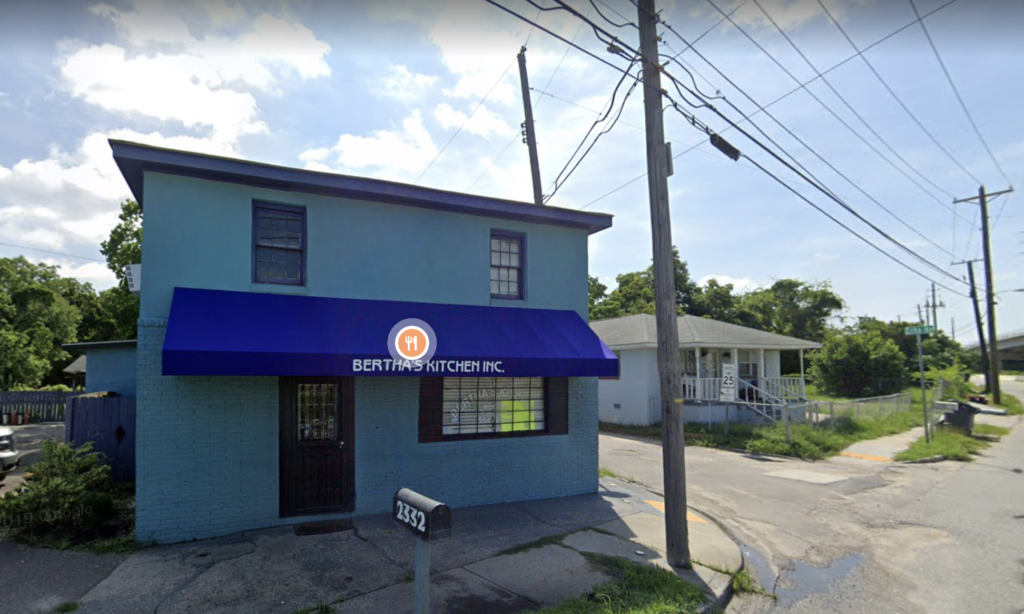
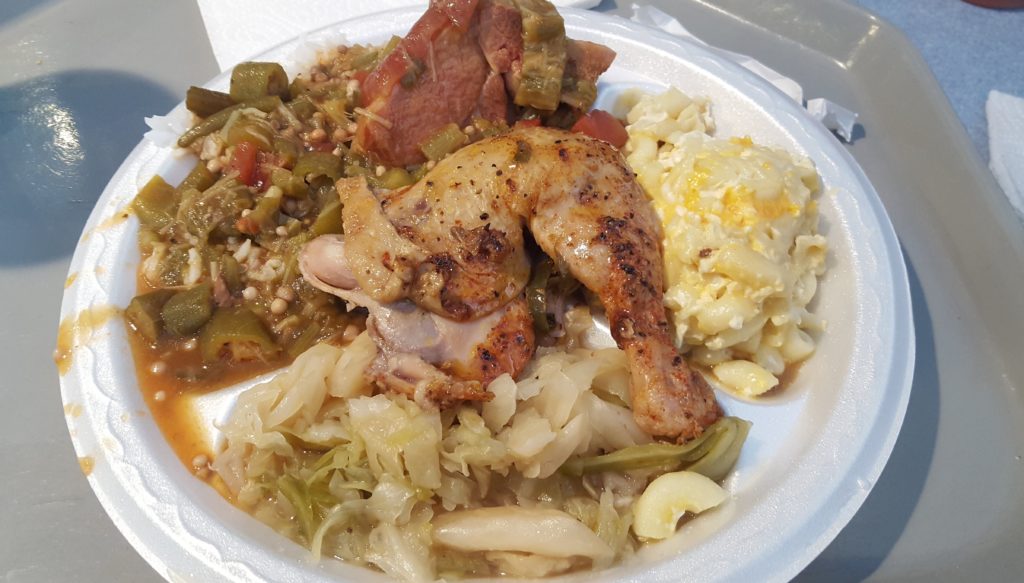
Soul food restaurants rate among the best restaurants in Charleston SC with the longest operating and most successful Black-owned businesses, with expert chefs serving up dishes passed down to them from their grandparents. These restaurants are no frills, usually serving up food on simple plates or Styrofoam to-go boxes, but what they lack in pretense they make up for in tradition and taste. Bertha’s Kitchen, at 2332 Meeting Street in North Charleston’s Union Heights, is a James Beard award winning, no frills restaurant that has been open for more than forty years. They specialize in stewed chicken necks in gravy, fried chicken, collards, and the usual fixings. The menu is a smorgasbord of Lowcountry soul food offerings: read fish and rice, fish sandwich, fried crab, pork chops, lima beans, and mac and cheese. Bertha’s granddaughter Kabriera Singleton carries on the family’s culinary traditions.
Also in North Charleston, Lorraine Smalls’, My Three Sons (Dorchester Road) is known for its simple seafood dishes, while people flock to Nigel’s Good Food (off of Highway 78) for the Geechie Wings. Carolyn McNeil and her son Kenyetta opened Nana’s Seafood and Soul Uptown (5117 Dorchester Road) in 2011 and proudly serve a variety of fried local seafood and their famous steamed garlic crabs, offering take away service and a small dining area.
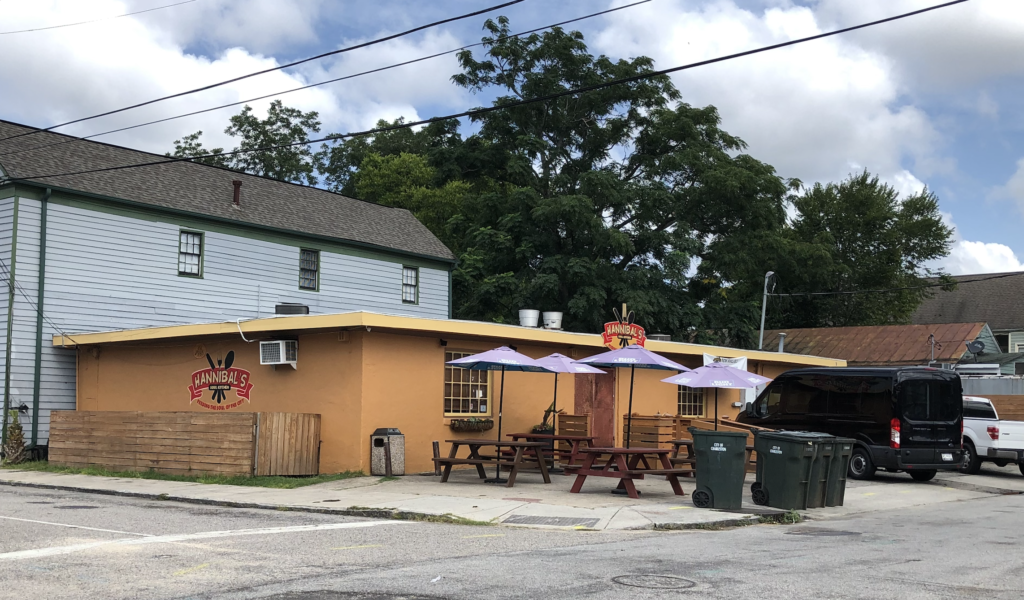
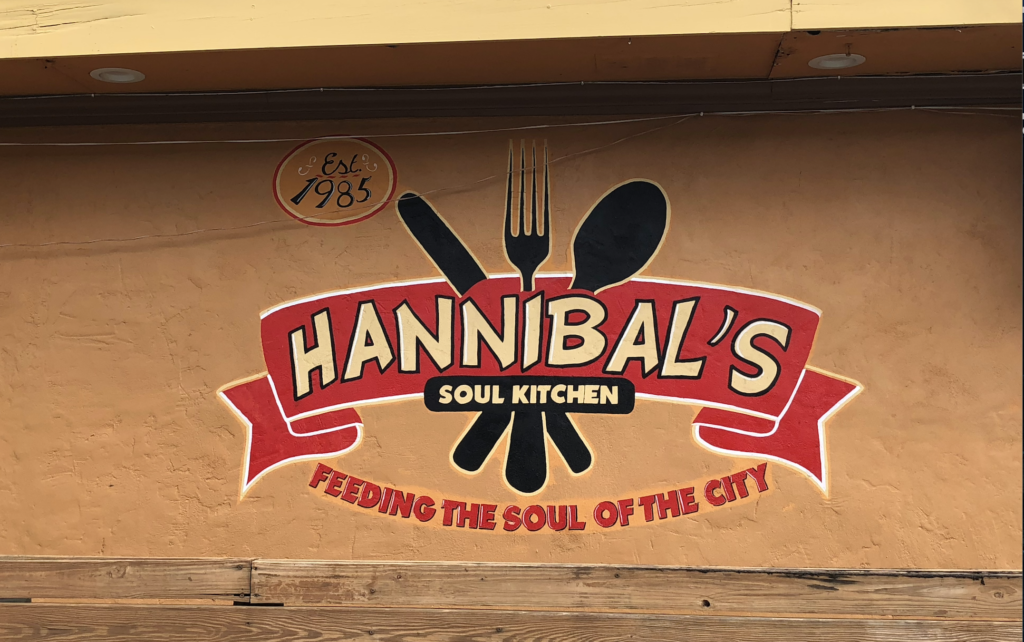
For soul food places in downtown Charleston, Hannibal’s on Drake Street in the East Side is the place to be. Popular with neighborhood denizens, it also attracts the occasional tourist because it’s been featured in Southern Living magazine several times as one of the best restaurants in Charleston SC. The Huger family opened Hannibal’s in 1985; it is named for the family’s patriarch, Robert Lawrence “Hannibal” Huger. Their motto is “feeding the soul of the city,” and theirs is a large and diverse menu: chicken livers, gizzards, drummets, crab rice, flounder, okra soup, shark steak, cabbage and delicious desserts (bread pudding, corn bread, lemon and strawberry cake.)
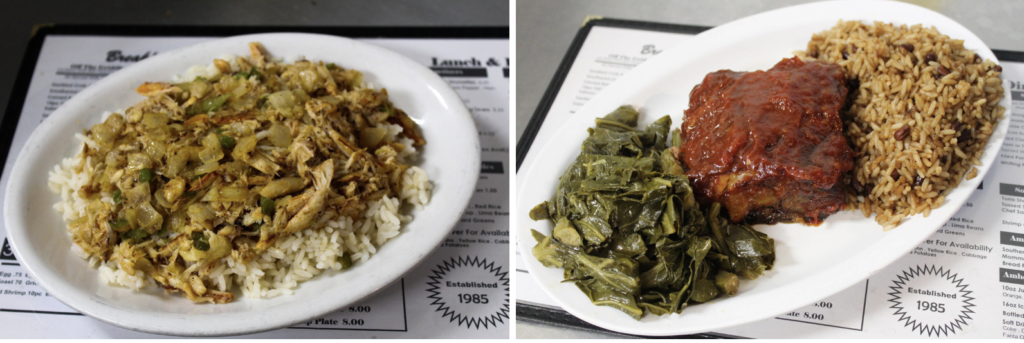
Their website gives a glimpse into their ethos: “Hannibal’s Kitchen isn’t one of those fancy restaurants with exquisite atmosphere and finery, but it serves some of the best soul food cuisine in the area. Sani Huger, LJ’s daughter, is now General Manager for the family owned business. Hannibal’s Kitchen became very successful and well known in the Charleston area under the leadership of Hannibal and Jessie Huger. Their guidance and personality was the driving force that made it possible for the restaurant to grow. Hannibal’s Kitchen does its part in preserving this rich culture by presenting authentic culinary dishes from the local Gullah culture for the world to enjoy.”
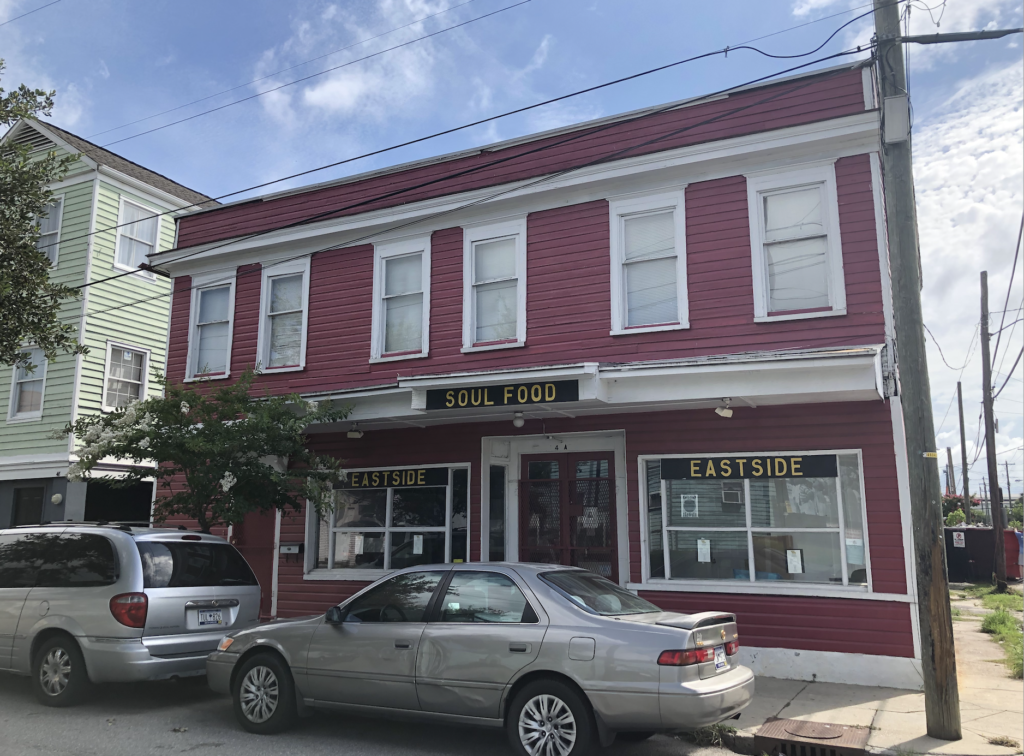
Located at Reid and America Street in a historic corner store building, Eastside Soul Food Restaurant is a popular newcomer for take-out and sit-down lunch. The simple menu hangs in the window of the bright red America Street façade: fried or barbecue chicken, fried pork chops, fish, the usual sides, and okra soup.
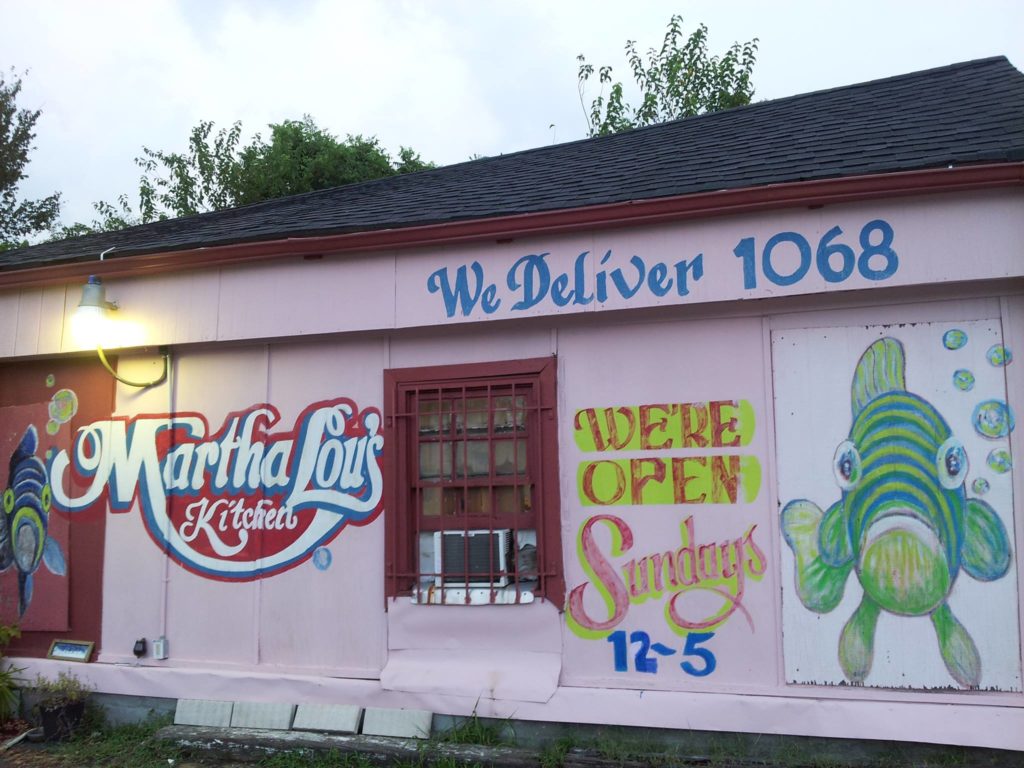
Sadly, another soul food staple touted by famed chefs like Sean Brock and Andrew Zimmern, Martha Lou’s Kitchen on the Charleston Neck, did not survive the ever-pressing interest in development in that part of the city. Martha Lou Gadsden cooked in the little pink cinder block building for over 37 years, but at 90, with the stress of Covid and changing times, she decided to retire. Luckily, Martha Lou’s has transitioned to catering from a different facility so locals can still get her baked chicken and collards for events.
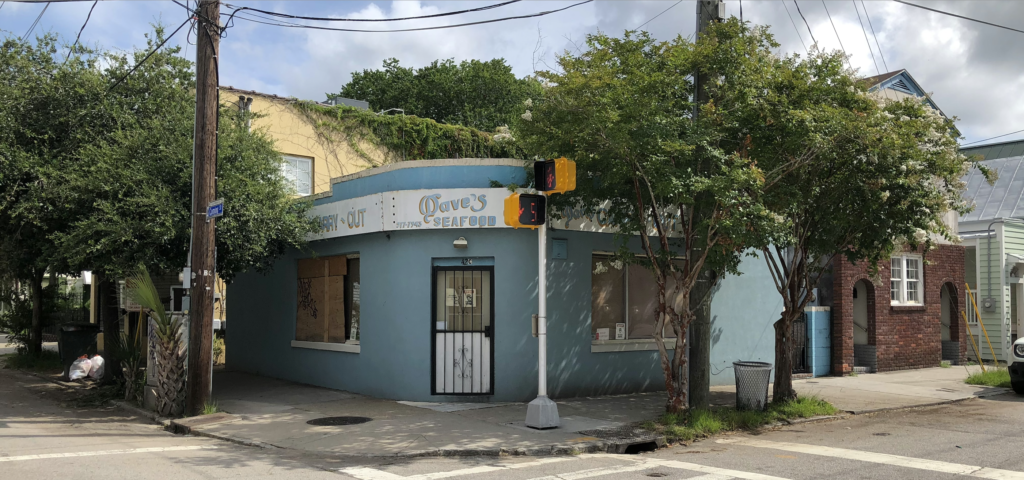
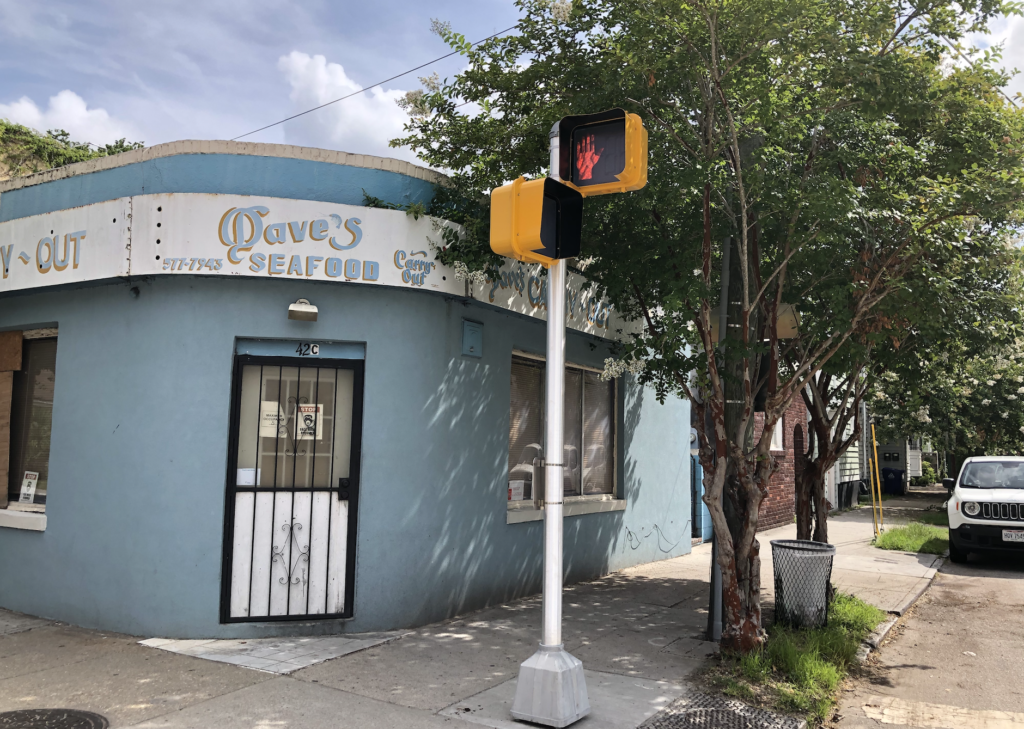
Dave’s Carry Out, owned by Sandra McCray runs a brisk lunch take away business on Morris Street on the edge of Charleston’s historically black business district. Crowd pleasers include the fried fish sandwich, seafood platter with devil crab, lima beans and rice, and the shrimp platter with collards.
For those easing into soul food and one of the best restaurants in Charleston SC, Virginia’s on King offers southern food and a few soul food staples along with shrimp and grits and other local fare: bone-in pork chop with fried glazed apples, mashed potatoes, and collard greens, a traditional “meat and three” option.
Next time you’re looking for a filling and tasty lunch in the Charleston area, support local Black-owned businesses and try some Soul Food places!
Sources:
- Charleston Evening Post. “Can you give an authentic definition of soul food?” 7 June 1972
- News and Courier. “ Harrison Jenkins on Carolina’s Soul Food.” 12 July 1968
- News and Courier. “Good Food.” 5 December 1968
- Charleston Evening Post. “You asked for it- soul food.” 19 June 1969.
- Post and Courier. “Soul food restaurant secret is out.” 10 June 1993
- Millie Peartree. “Everything you need to know about soul food.” https://www.delish.com/food-news/a26356466/what-is-soul-food/
- Charlotte Jenkins. Gullah Cuisine: By Land and By Sea. Charleston: Evening Post Publications, 2010.
- Rosalind Bentley. Southern Living. “Gullah Magic in Charleston, South Carolina. A culinary tour of the city’s African American legends.” March 2020
- Rick McDaniel. An Irresistible History of Southern Food: four centuries of black-eyed peas, collard greens, and whole hog barbecue. Charleston: Arcadia Publishing, 2014.
- https://hannibalkitchen.com “feeding the soul of the city.”
- Hannah Raskin. Post and Courier. Martha Lou’s kitchen, peninsular Charleston’s preeminent soul food destination, has closed. 16 April 2020.
- Sarah Rutledge. The Carolina Housewife. (republished by Anna Wells Rutledge by University of South Carolina Press, 1979.)
- Chase Quinn. “inside the lunch rush at Bertha’s Kitchen, a soul food institution.” Bon Apetit. June 2018.


 CALL US
 EMAIL US